

Lecture
On June 12, 2025, a lecture titled “The Study of the Botai Culture” was delivered at the Botai settlement for students of Sh. Ualikhanov Kokshetau University.
The program also included an exhibition tour based on materials and artifacts of the Botai culture.
Staff of the Botai Museum-Reserve presented information to the students about the unique results of nearly 40 years of research conducted by Professor V.F. Zaibert and his colleagues from Kazakhstan, the United Kingdom, the United States, Germany, Russia, and other countries. These studies provide evidence that the ancient bearers of the Botai culture were the first to domesticate horses on the territory of Kazakhstan, within the Ural–Irtysh interfluve, as early as the late Stone Age.
Excursion
On June 12, 2025, students from the secondary school of Bayantai village in Aiyrtau District, North Kazakhstan Region, visited the Botai Museum-Reserve.
An excursion was conducted for the schoolchildren in the exhibition hall of the Botai Museum-Reserve and at the Botai settlement.
“Tribute to the Homeland”
On June 11, 2025, within the framework of the project “Tribute to the Homeland,” aimed at gaining a deeper understanding of the history and culture of our country and fostering patriotism and respect for the homeland among the younger generation, students of the Nazarbayev Intellectual School of Petropavlovsk visited the Botai Museum-Reserve.
An excursion was organized for the students in the exhibition hall of the museum-reserve.
Nazarbayev Intellectual School of Chemistry and Biology, Petropavlovsk
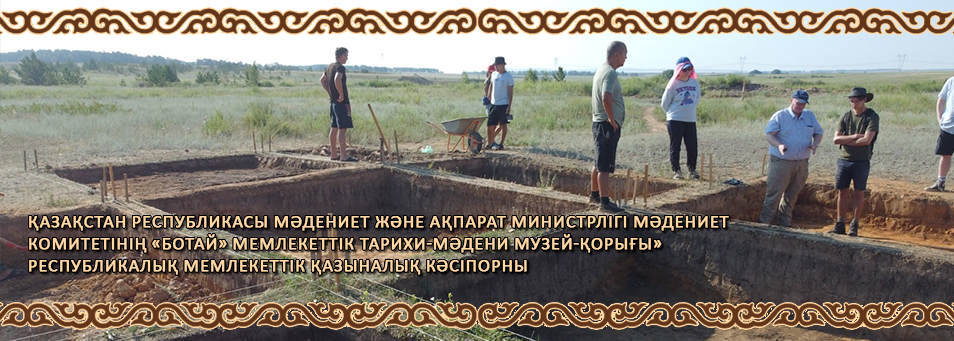
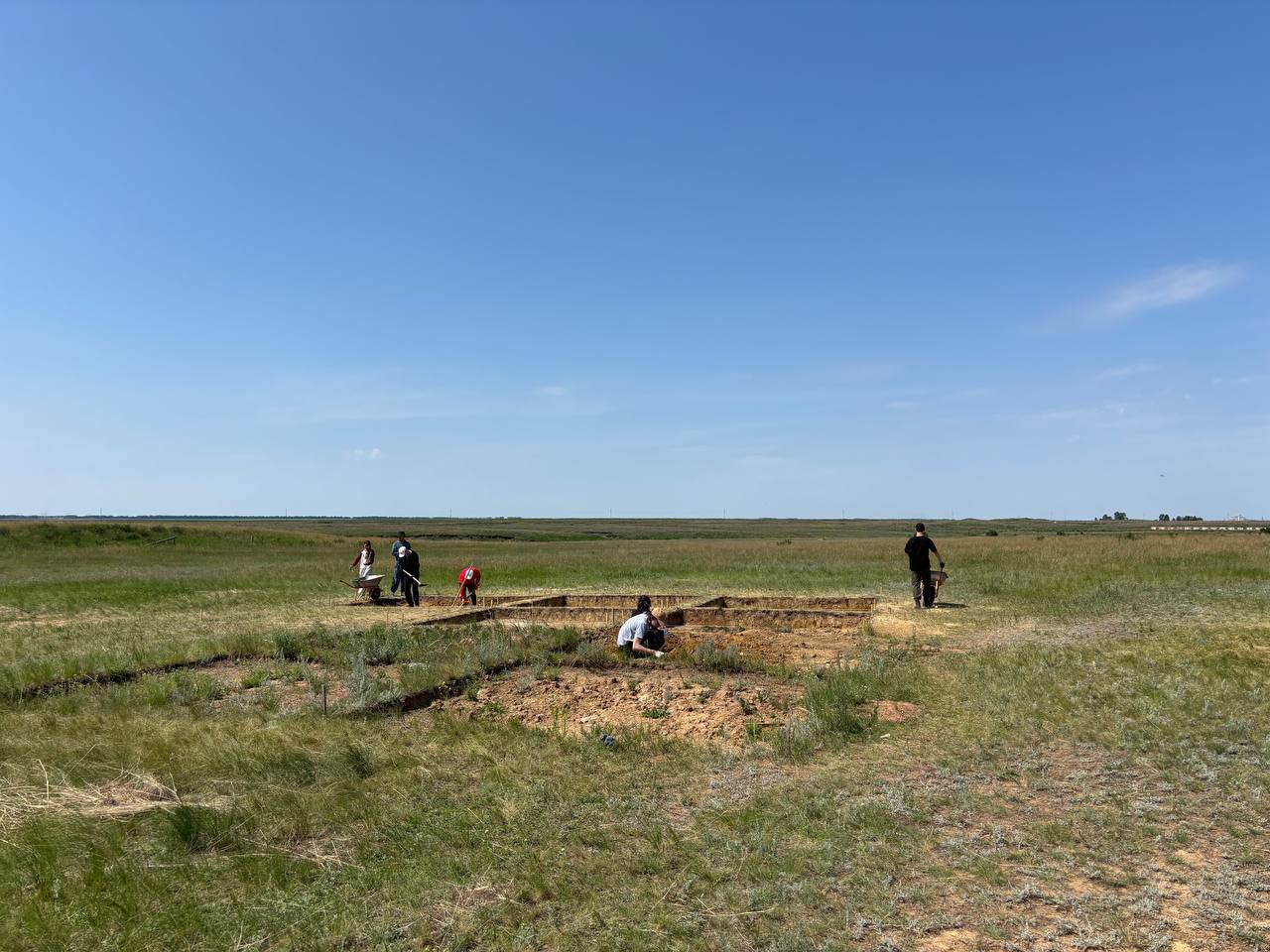
On June 5, 2025, students of the Nazarbayev Intellectual School of Chemistry and Biology in Petropavlovsk arrived at the Botai settlement to undertake archaeological training practice.
During the practice, they became familiar with the basic methods of excavation and took direct part in the process of studying ancient artifacts.
This experience became an excellent opportunity to gain a deeper understanding of history and archaeology beyond the classroom, in a real historical environment.
Teambuilding
On June 4, 2025, on the Day of the State Symbols of the Republic of Kazakhstan, the Republican State Enterprise “State Historical and Cultural Museum-Reserve ‘Botai’” of the Committee of Culture of the Republic of Kazakhstan organized an excursion to the protected zone for children from the Center for Support of Children in Need of Special Social Services of Aiyrtau District. The area features ancient archaeological settlements, historical monuments, and the picturesque nature of Aiyrtau District in North Kazakhstan Region.
The staff of the Botai Museum-Reserve conducted a teambuilding event in an interactive and game-based format for the children’s recreation.