

Republican Scientific and Practical Conference “New Trends and Prospects for the Development of Museum Work and Archaeological Research in Kazakhstan”
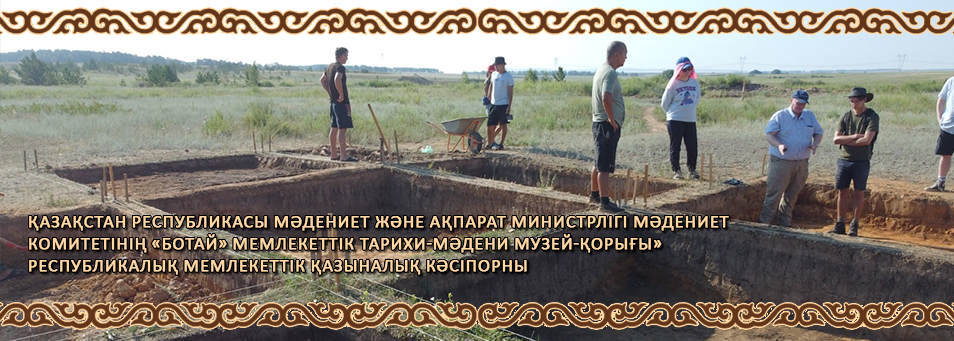
The North Kazakhstan Region is rightly considered the northern gateway to Kazakhstan. Northern Kazakhstan is a land of vibrant colors and lush nature, yet it also impresses with remarkable strictness and even harshness. The region is home to a number of unique natural complexes of national significance and is currently very promising for tourism development, as in addition to its captivating nature, it contains numerous historical and cultural sites. One of the most famous is the Botai settlement, located near the Imantausko-Shalkar resort area. Today, the Botai settlement attracts special attention. In his seminal article, Leader of the Nation N. A. Nazarbayev, “Seven Facets of the Great Steppe,” named equestrian culture as one of the first facets, noting that “the first domestication of the horse by humans occurred on the territory of modern Kazakhstan, as evidenced by the excavations of the Botai settlement in the north of the country.” Years of excavations and archaeological discoveries allowed V. F. Zaibert to identify the Botai Eneolithic culture, and enabled the Botai settlement to be included in the list of sacred sites of Kazakhstan.
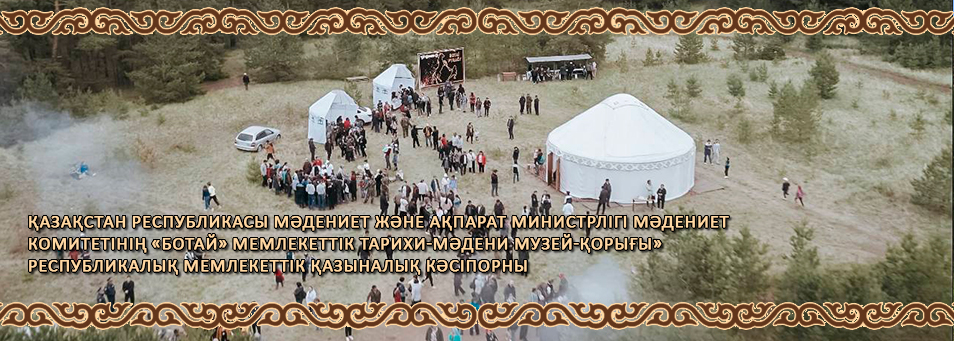
To promote this historical and cultural site, the Botai settlement, the Republican Scientific and Practical Conference “New Trends and Prospects for the Development of Museum Work and Archaeological Research in Kazakhstan,” dedicated to the 30th anniversary of Kazakhstan’s Independence, was held on October 7–8, 2021. The event was organized by the State Historical and Cultural Museum-Reserve “Botai,” with the support of the Ministry of Culture and Sports of the Republic of Kazakhstan and the Akimat of the North Kazakhstan Region. Conducted in both offline and online formats, the conference brought together historians, archaeologists, specialists from the Center for the Protection and Promotion of Historical and Cultural Heritage, directors of museums and reserves, local history museums, and tourism experts from different regions of Kazakhstan. The conference served as a dialogue platform, where participants shared their opinions and engaged in extensive discussions on topics of interest to archaeologists.
Highlights included presentations by museum directors and researchers from across Kazakhstan, who showcased video presentations, research projects, and cultural-educational initiatives in archaeology. Discussions also addressed issues of historical and cultural preservation and the development of tourism clusters.
For conference participants, the staff of the Botai Museum-Reserve and the North Kazakhstan Regional Museum Association presented an exhibition of artifacts from the Botai settlement, along with artwork dedicated to Botai culture.
During the two-day conference, participants took a guided tour of the Imantausko-Shalkar resort area and visited the Mausoleum of Karasai and Agyntai Batyrs, the Shokan Ualikhanov Historical-Ethnographic Museum, and the Ayganim Estate Museum in the village of Syrimbet.
All of this is captured in our video